




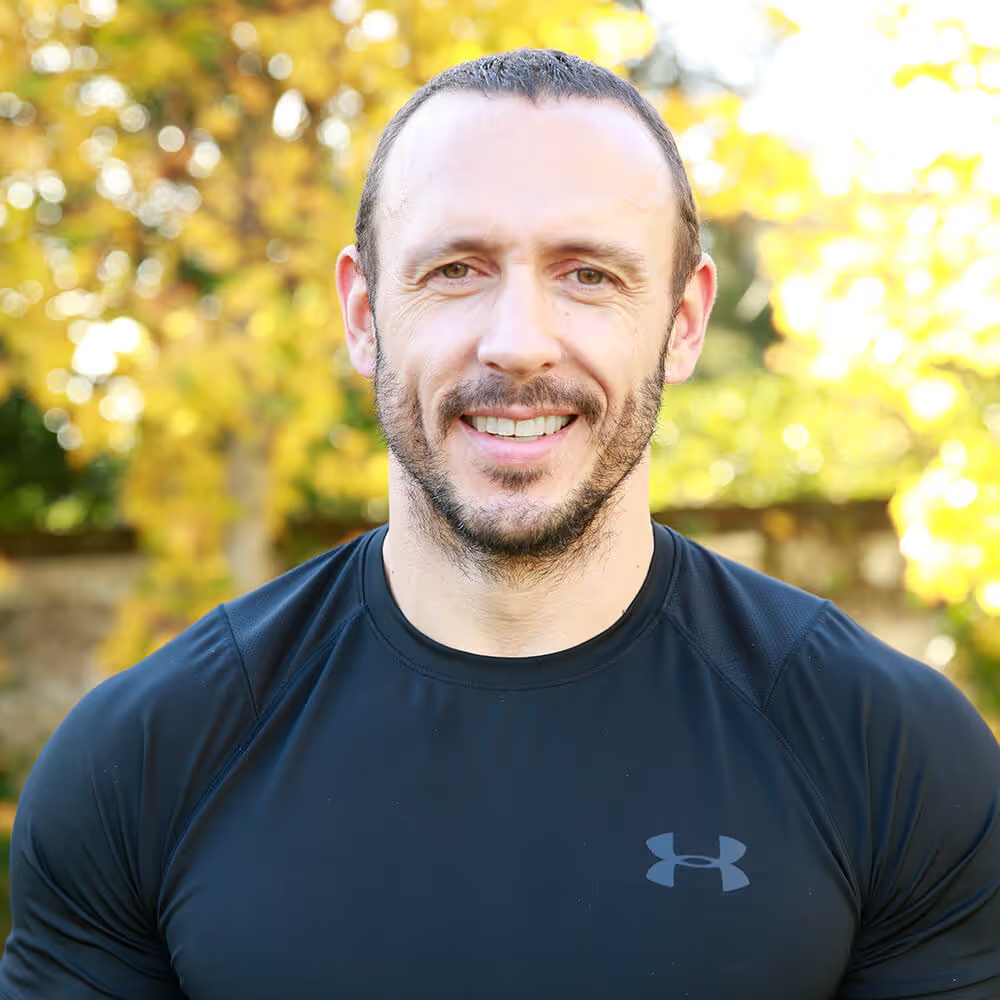
Andy Marlow, McGill Method Certified since 2019.
I used to live in Montmartre in Paris, just around the corner from the 220-step staircase that leads up to the Sacre Coeur cathedral that looks down over the city.
I would run up and down these stairs a few times a week when I was preparing for tower running races that I used to take part in. Sometimes I'd run backwards up the slopes at the sides of the stairs, or hop or jump up the stairs to vary my training.
My back injury happened the day that I decided I would jump up the stairs, two at a time, from the bottom to the top. I'd like to say that there was a spectacular fall involved, but anticlimactically, I managed to put my back out on the very first jump.
Wanting to get off to a good start, I crouched down, wound my arms back, then attempted to jump explosively up the first few steps. That's when I felt the intense, stabbing pain in my lower back. My back muscles seized up and any attempt to bend forward slightly would provoke the same stabbing pain. The intensity of the pain made me immediately wonder whether my back would ever be the same again.
My back had been rounded when I generated the force with my legs, resulting in an injured disc in my lumbar spine. But, in reality, this single action wasn't to blame. It had been an injury waiting to happen.

My favourite staircase in Paris
The combination of a previous back injury years earlier (also as a result of loading my spine with poor technique), years spent slouched at my computer in a sedentary job in the years that followed, and inappropriate exercises in my training program at the time had created the perfect storm for this new injury to occur.
And because I'd never learned the real cause of my first back injury, or understood how I could prevent it happening again, I was destined to repeat the same mistake.
The medical treatment I'd received after my first injury was limited to pain pills, rest and stretches. This didn't help very much, and I would have flare-ups for years. But, eventually, the pain went away on its own.
With my second injury, I may have been in a different country, but, the medical advice I was given was practically the same. All I knew was that I didn't want to experience this again, so I began researching better options for a successful recovery. That's when I came across the work of Professor Stuart McGill.
I learnt that The McGill Method was a science-based, practical approach that had a reputation for helping people with low back pain avoid surgery. Following the principles outlined in his books, I was able to recover while avoiding flare-ups and get back into training again with confidence. I was eventually able to become fitter and stronger than I had been before my injury.
After applying these same principles to clients of mine who had also been failed by generic rehab methods, the results convinced me that this should be my main focus.
I became certified in The McGill Method in 2019 and committed to specialising in low back rehabilitation so that I could help others get their lives back the way I had. You can read some of their testimonials here.
Since my most recent injury, my back has survived kettlebell instructor courses, comfortably deadlifting double my bodyweight and a brief 6-month venture into Brazilian Jiu-jitsu (cut short by a shoulder injury), without ever getting re-injured.
After turning 50, I stick to playing Padel and lifting weights in a more joint-friendly way, with my main goal now being longevity.
Andy Marlow