Featured in:






Yesterday I saw a LinkedIn post from a chiropractor that genuinely surprised me, in a good way.
He said: 'the “crack” isn’t the treatment.' Yes, adjustments can provide short-term relief. Yes, people often feel better after a session. But, that doesn’t mean the underlying problem is fixed. Long-term change usually requires progressively rebuilding strength, tolerance to load, and confidence in movement.
Hearing that from a practising chiropractor was refreshing because while it’s something many of us working in rehab have known for years, it’s not always said out loud.
So, should you see a chiropractor for your back pain?
It depends.
Let’s get the uncomfortable part out of the way.
Chiropractic didn’t begin as a neat, evidence-based branch of musculoskeletal care. Its founder, D.D. Palmer, was deeply tied to spiritualism and “magnetic healing,” and he described receiving chiropractic concepts “from the other world” via a deceased physician.
That history matters because it explains why chiropractic still has an identity problem today: part modern musculoskeletal care, part 'woo-woo' vitalism/subluxation ideology. The balance of these varies significantly between practitioners.
And historically, organised medicine fought chiropractic hard. The American Medical Association (AMA) had policies against associating with chiropractors and famously called chiropractic an “unscientific cult”.
So yes, there’s quackery in the roots. And some of it still exists today.
But, the origins don’t automatically determine current usefulness. What matters is what happens in the clinic today and what the evidence says.
The evidence for spinal manipulation therapy (SMT) is most convincing as a short-term tool in acute low back pain. In the first few days or weeks of a flare-up, an adjustment can reduce pain and stiffness a bit and make movement feel safer. This can be enough to get you walking, sleeping, and functioning again.
For chronic low back pain, manipulation can still help, but the average effect is smaller and it generally performs about the same as other recommended conservative options. In other words, it can be useful, but it’s rarely the thing that changes the long-term trajectory.
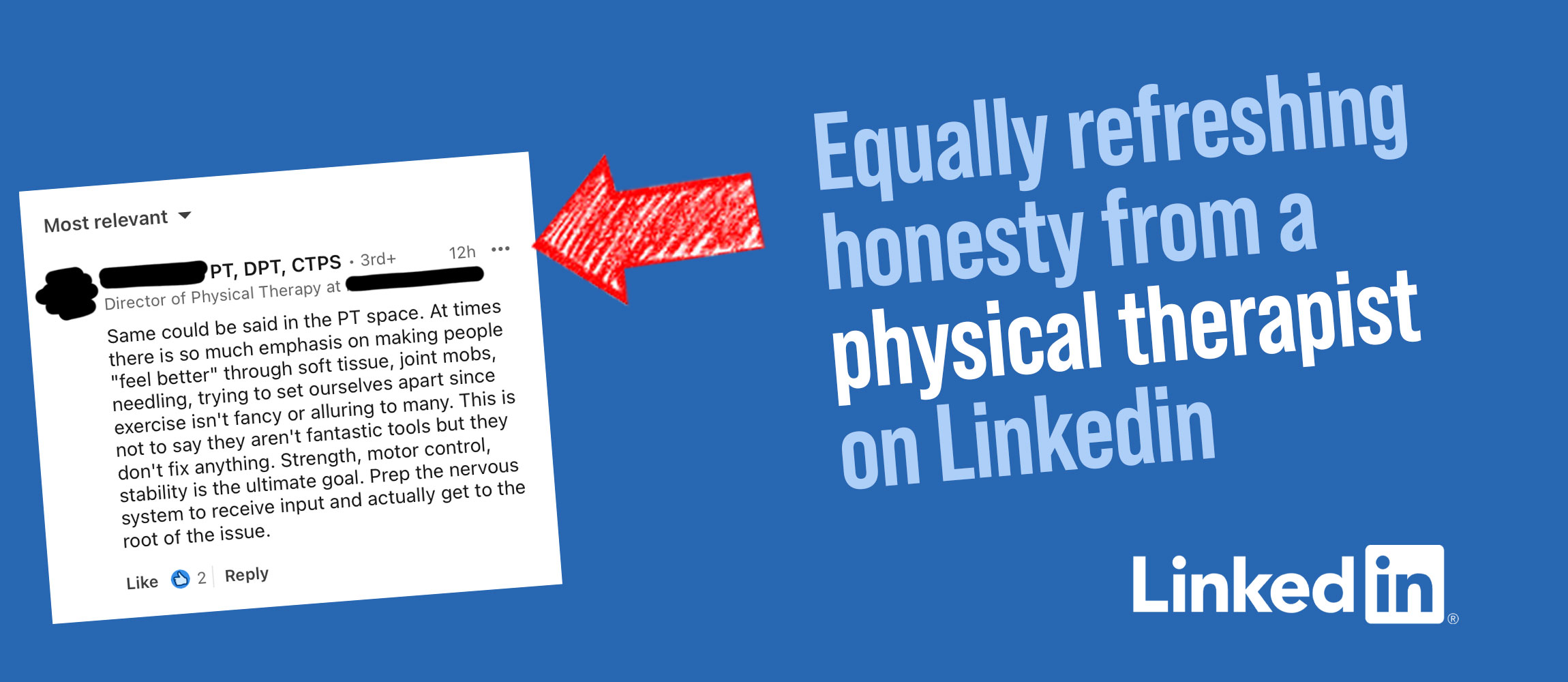
One of the first comments on the Linkedin post featured above came from an experienced physical therapist. His honesty was equally refreshing, pointing out the similarities between chiropractic and physical therapy: too much emphasis on making people feel better with passive treatments (where the patient lies on the table and has a technique applied to them).
He also highlighted that strength, stability and motor control were the keys to long term success.
If you want a long-term solution to your low back pain, your best bet is a practitioner who:
That person could be a chiropractor. Or a physio. Or a McGill Method certified personal trainer.
The key point to recognise is that long-term change doesn't come from being cracked back into place or being cupped / dry-needled / massaged while you lie prone on a table.
It comes from eliminating your pain triggers, progressively rebuilding load tolerance and developing your confidence and ability to move again.